
Read Time
By the end of 2026, 40% of enterprise applications will embed task-specific AI agents, a massive leap from less than 5% in 2025. Despite this projected 8x growth, the industry faces a stark reality: 70% of 2024 pilot cohorts failed to reach full-scale production within 18 months. Consumer goods brands must shift from experimental pilot programs to cloud-agnostic, full-stack orchestration to bridge this production gap.
TL;DR
The primary barrier to AI adoption is not model sophistication but the inability to integrate agentic workflows into existing production environments.
A 70% failure rate in scaling pilots highlights that current experimental approaches are insufficient for enterprise-grade deployment.
Hyperscaler-locked architectures create long-term cost and flexibility risks that hinder sustainable AI growth.
Prioritizing high-ROI domains like supply chain and marketing provides the necessary stability to move beyond the pilot phase.
Success in the consumer goods sector depends on building robust, vendor-neutral pipelines rather than relying on proprietary walled gardens.
The transition from proof-of-concept to production is the defining bottleneck for enterprise AI. While 51% of enterprises report having AI agents in production as of 2026, the vast majority of these initiatives remain trapped in limited, non-scalable environments. This failure to scale is not a lack of ambition but a failure of infrastructure design.
Brands often treat AI agents as standalone experiments rather than integrated components of their operational stack. This disconnect between the pilot environment and the production reality is why so many initiatives stall. What technical requirements must be met to ensure these agents function reliably within a complex enterprise architecture?
The primary failure point is the inability to integrate agentic workflows into existing, complex enterprise production environments, leading to a gap between pilot success and scalable deployment.
Cloud-agnostic architectures prevent vendor lock-in, reduce long-term operational costs, and provide the flexibility needed to adapt to rapidly evolving AI technologies without being restricted by hyperscaler limitations.
Marketing and supply chain operations are currently the most mature domains, offering the highest measurable impact through the automation of complex, data-driven business processes.
BCG. (2026). How AI agents are transforming supply chains.
Forrester. (2026). The ROI of Agentic AI in Supply Chain Management 2026.
Gartner. (2025). 2025 Enterprise AI Adoption Study.
Gartner. (2026). Top Strategic Technology Trends for 2026: Retail and Consumer Goods.
IDC. (2025). Worldwide AI and Generative AI Spending Guide 2025.
Microsoft. (2026). Agentic AI is reshaping retail economics.
Prompted LLC. (2026). When autonomous agents cross the production chasm.
Ringly. (2026). AI agent statistics 2026.
Many enterprises rely on hyperscaler-specific tools to launch their initial AI projects, only to find themselves trapped in restrictive, high-cost environments. These "walled gardens" limit deployment flexibility and complicate the integration of diverse data sources. A cloud-agnostic, Kubernetes-based approach is essential for maintaining control over long-term operational costs.
By decoupling the AI orchestration layer from specific cloud providers, brands gain the freedom to adapt to evolving technologies without re-architecting their entire stack. This flexibility is the foundation of a future-ready infrastructure that supports continuous innovation. How can brands identify which business processes are best suited for this level of rigorous, production-grade orchestration?
Marketing and supply chain operations currently offer the highest measurable ROI for agentic AI. These domains benefit from the deterministic nature of task-specific agents, which outperform customer-facing chatbots in stability and bottom-line impact. Focusing on these areas allows brands to build the necessary internal expertise while delivering tangible value.
A global consumer goods company recently demonstrated that AI agents can significantly reduce reactive analytics and firefighting in supply chain management. By automating these complex, data-heavy workflows, brands move from experimental AI to essential operational infrastructure. What are the specific risks associated with failing to secure this infrastructure before scaling further?
Insight Corner: The Maturity Gap
Gartner’s 2026 Hype Cycle places agentic AI at the Peak of Inflated Expectations. This positioning confirms that while the market potential is immense, the current execution gap is a structural reality that requires a shift toward disciplined, full-stack engineering.
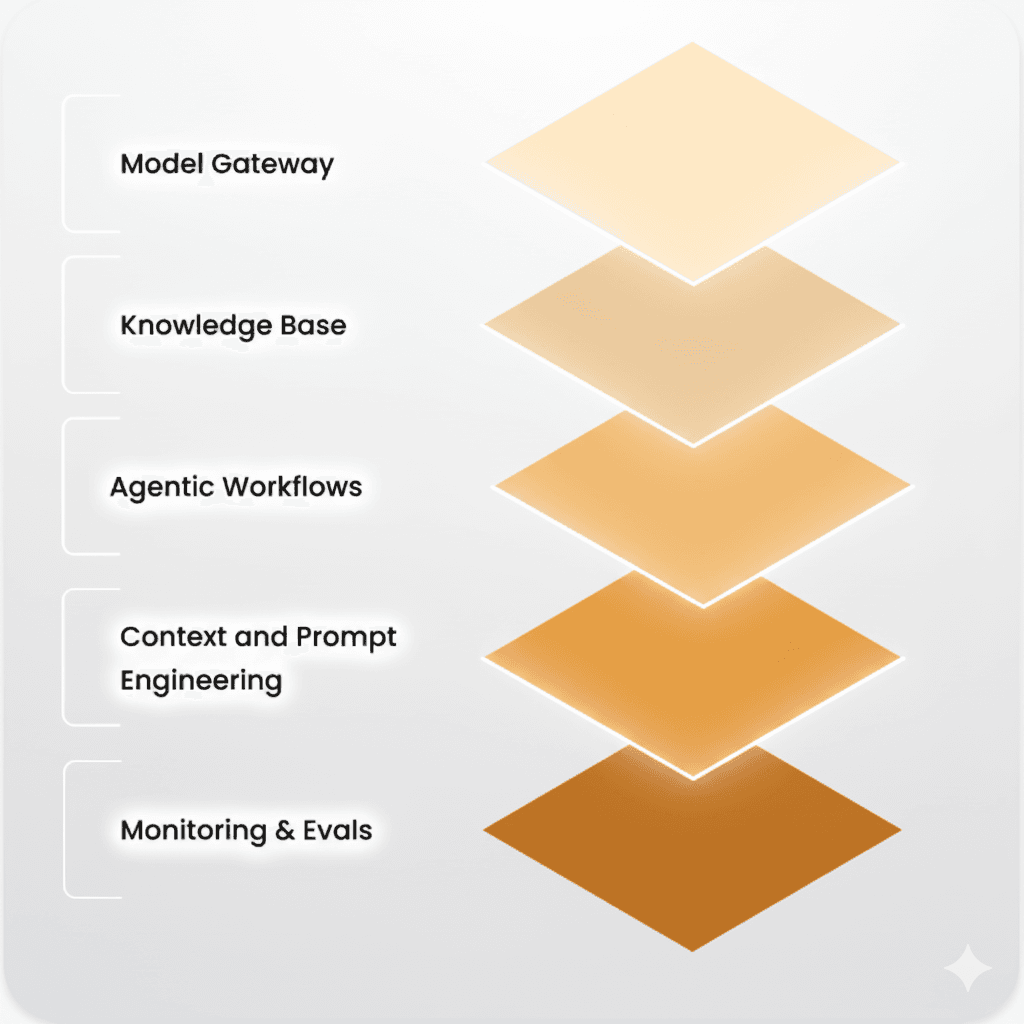
The winners in the consumer goods space will not be those with the most advanced models, but those with the most robust, scalable, and vendor-neutral production pipelines. Moving beyond the pilot phase requires a commitment to observability, traceability, and workflow management that goes beyond simple prompt engineering. Brands that prioritize these foundational elements will successfully navigate the transition to production.
The era of experimental AI is ending, replaced by a demand for reliable, enterprise-grade execution. By focusing on cloud-agnostic orchestration and high-ROI domains, brands can finally bridge the gap between promise and performance. The future of AI in consumer goods belongs to those who treat agents as core infrastructure rather than temporary experiments.