Reimagining Collaboration: Human-Agent Synergy Insights

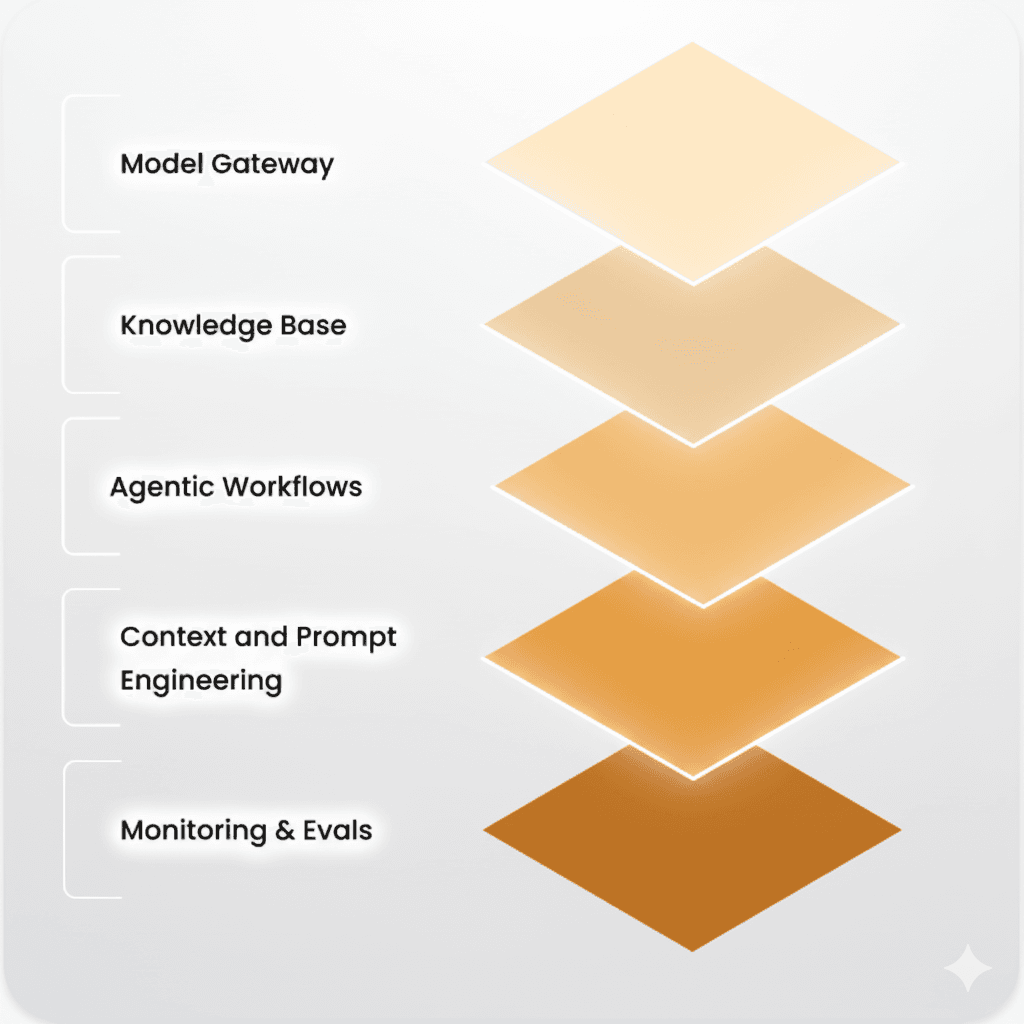
The workplace is transforming at an unprecedented pace. As artificial intelligence evolves from simple automation to sophisticated intelligent systems, enterprises face a critical question: How can humans and AI agents work together to unlock new levels of productivity and innovation?
This shift represents more than technological advancement—it's a fundamental reimagining of how work gets done. Organizations that master human-agent collaboration position themselves to thrive in an increasingly competitive landscape while those that resist risk falling behind.
Human-agent collaboration goes far beyond traditional automation. While automation replaces human tasks, true AI collaboration creates partnerships where humans and intelligent agents complement each other's strengths.
Think of it this way: automation handles repetitive tasks, but collaborative AI systems engage in dynamic problem-solving alongside human teams. These intelligent agents can analyze vast datasets, identify patterns, and suggest solutions while humans provide context, creativity, and strategic direction.
Traditional automation followed simple rules: if this happens, do that. Modern agent collaboration operates differently. These systems learn, adapt, and respond to changing conditions in real-time.
Consider customer service. Old chatbots followed scripts. Today's AI assistance systems understand context, emotion, and intent. They work with human agents to provide better solutions faster than either could achieve alone.
Recent studies show enterprises implementing effective human-machine partnerships see productivity gains of 20-30% within the first year. More importantly, employee satisfaction often increases as AI handles routine tasks, freeing humans for more meaningful work.
Successful human-AI interaction relies on understanding cognitive complementarity. Humans excel at creativity, emotional intelligence, and complex reasoning. AI agents shine at data processing, pattern recognition, and consistent execution.
Trust forms the foundation of effective AI teamwork. Employees need to understand how AI systems make decisions and feel confident in their reliability. Transparency becomes crucial—teams work better with AI when they can see the reasoning behind recommendations.
Successful implementations start small. Teams begin with low-risk tasks, build confidence, and gradually expand AI involvement. This approach allows natural trust-building while demonstrating value.

Augmented intelligence requires clear communication channels. AI systems must present information in ways humans can quickly understand and act upon. Similarly, humans need intuitive ways to guide and correct AI behavior.
Expert Insight
Organizations that establish clear protocols for human-AI communication see 40% faster decision-making cycles. The key is creating feedback loops where humans can easily guide AI learning while AI provides actionable insights humans can immediately use.
Building effective collaborative AI systems requires careful attention to architecture and integration. These systems must seamlessly blend into existing workflows while providing new capabilities.
Modern cooperative AI systems need flexible, scalable architectures. They must handle real-time data processing while maintaining security and compliance standards. Cloud-agnostic platforms offer the flexibility enterprises need to deploy AI where it makes most sense.
Integration becomes critical. AI systems that require complete workflow overhauls often fail. Successful implementations work within existing processes, enhancing rather than replacing established procedures.
Effective agent collaboration happens in real-time. AI systems must process information quickly enough to support human decision-making without creating bottlenecks. This requires robust infrastructure and optimized algorithms.
Data sharing protocols ensure AI agents have access to relevant information while maintaining privacy and security. Role-based access controls allow different team members to interact with AI at appropriate levels.
Rolling out human-machine partnerships requires thoughtful change management. Success depends on preparing teams, setting realistic expectations, and measuring progress effectively.
Start with pilot programs in areas where AI can provide immediate value without disrupting critical operations. Customer service, data analysis, and content creation often serve as excellent starting points for AI collaboration.

Each phase should build on previous successes while expanding capabilities. This approach allows teams to develop expertise gradually while demonstrating ROI to stakeholders.
Effective AI teamwork requires new skills. Teams need to understand how to work with AI systems, interpret their outputs, and provide meaningful feedback. Training programs should focus on practical applications rather than technical details.
Hands-on workshops work better than theoretical presentations. Let teams experiment with AI tools in safe environments where mistakes become learning opportunities rather than problems.
Intelligent agents transform work across industries. In healthcare, AI assists with diagnosis while doctors provide treatment decisions. Financial services use AI for risk analysis while humans handle client relationships.
Customer service showcases AI assistance at its best. AI handles routine inquiries instantly while escalating complex issues to human agents with full context. This creates faster resolution times and higher satisfaction scores.
Creative teams use collaborative AI for ideation, content generation, and design optimization. AI provides inspiration and handles technical execution while humans guide creative direction and ensure brand alignment.
Every organization faces obstacles when implementing human-AI interaction systems. Common challenges include employee resistance, technical complexity, and unrealistic expectations.
Fear of job displacement remains the biggest barrier to augmented intelligence adoption. Address these concerns directly by showing how AI enhances rather than replaces human capabilities. Highlight examples where AI creates new opportunities and makes work more interesting.
Involve employees in AI implementation decisions. When teams help shape how AI integrates into their work, they become advocates rather than resistors.
.jpg&w=3840&q=75)
Technical integration challenges can derail AI initiatives. Choose platforms that simplify deployment and management. Look for solutions that provide full-stack capabilities without requiring extensive technical expertise.
Security and compliance must be built-in, not added later. Enterprise-grade platforms ensure AI systems meet regulatory requirements while maintaining operational flexibility.
Human-agent collaboration involves humans and AI systems working together as partners rather than AI simply automating tasks. It combines human creativity and judgment with AI's data processing and pattern recognition capabilities to achieve better outcomes than either could accomplish alone.
Start with pilot programs in low-risk areas, provide comprehensive training, establish clear communication protocols between humans and AI, and gradually expand implementation based on proven successes. Focus on enhancing existing workflows rather than completely replacing them.
Benefits include increased productivity, faster decision-making, reduced errors, enhanced creativity, and improved job satisfaction as humans focus on more meaningful work while AI handles routine tasks.
Track metrics like productivity gains, decision-making speed, error reduction, employee satisfaction, and ROI. Also monitor qualitative factors such as team confidence in AI recommendations and adoption rates across different departments.
Employees need to understand AI capabilities and limitations, learn to interpret AI outputs, develop skills in providing feedback to AI systems, and maintain critical thinking abilities to validate AI recommendations.
The future belongs to organizations that successfully blend human intelligence with artificial intelligence. Human-agent collaboration isn't just about technology—it's about reimagining how teams can achieve extraordinary results together. By focusing on partnership rather than replacement, enterprises can unlock new levels of innovation while empowering their workforce to reach new heights of productivity and creativity.
Ready to explore how your organization can benefit from advanced AI collaboration? Discover how integrated platforms can simplify your journey from proof-of-concept to production-ready AI solutions while maintaining the security and control your enterprise demands.


Copyright © 2025 dotkonnekt Pte Ltd. All rights reserved.