Vertical AI Execution: Transforming Enterprise Solutions

.jpg&w=3840&q=75)
Enterprise AI adoption has reached a critical juncture. While organizations recognize the transformative potential of artificial intelligence, many struggle to move beyond proof-of-concept stages into production-ready solutions. The challenge lies not in the technology itself, but in finding AI systems that understand the unique demands of specific industries. This is where vertical AI execution engines emerge as game-changers, offering industry-specific intelligence that transforms how enterprises deploy and scale AI solutions.
Unlike generic AI platforms that attempt to serve all industries with one-size-fits-all approaches, vertical AI execution engines are purpose-built for specific sectors. They combine deep domain expertise with advanced AI capabilities, creating solutions that speak the language of your industry from day one.
A vertical AI execution engine represents a specialized AI execution platform designed to address the unique challenges and requirements of specific industries. These systems go beyond traditional horizontal AI solutions by incorporating industry-specific data models, compliance frameworks, and workflow patterns that align with sector-specific business processes.
The foundation of any effective vertical AI solution rests on three core pillars: domain expertise, pre-trained industry models, and specialized workflow automation. Domain expertise ensures the AI understands industry terminology, regulations, and best practices. Pre-trained models come equipped with knowledge specific to your sector, reducing training time and improving accuracy from deployment. Specialized workflow automation integrates seamlessly with existing business processes, minimizing disruption while maximizing value.
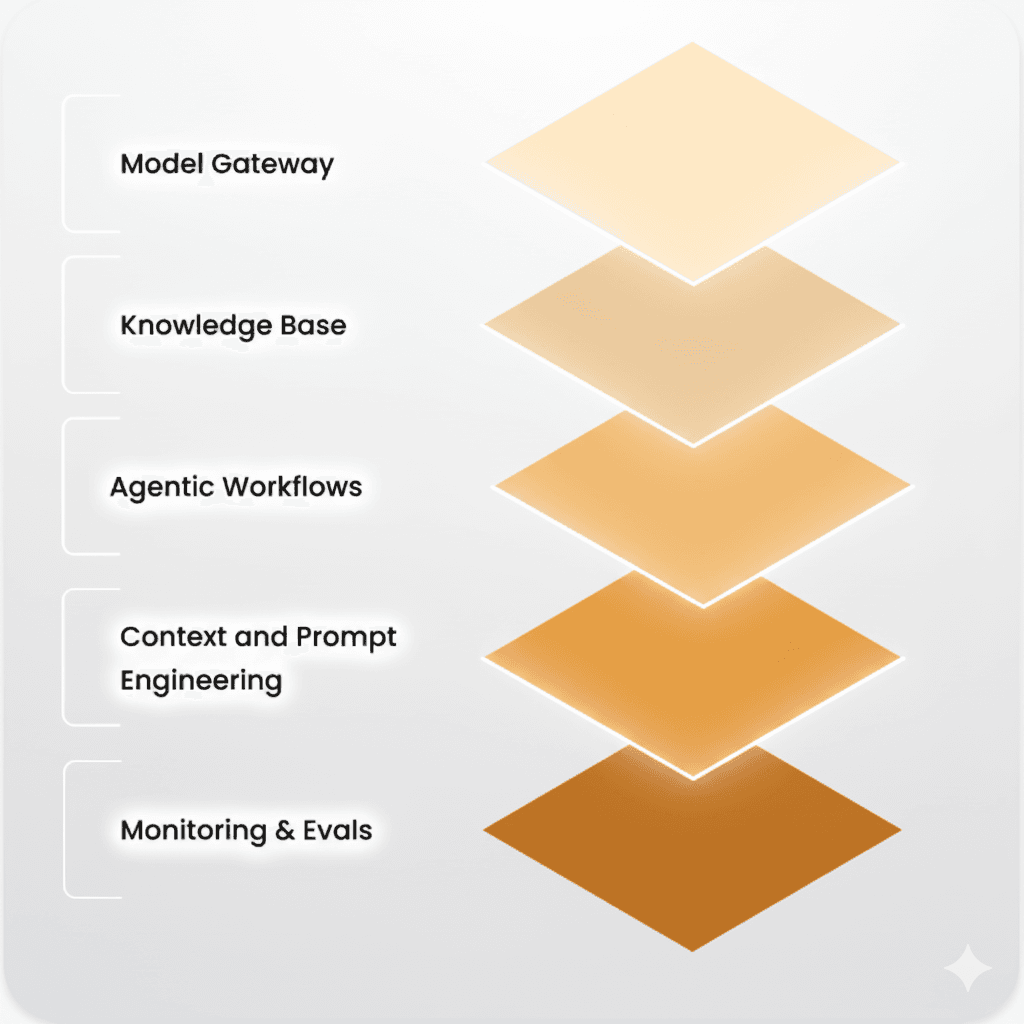
Modern vertical AI execution engines feature layered architectures that separate data ingestion, processing, and output functions. The data layer handles industry-specific data formats and sources. The processing layer applies domain-tuned AI models and business rules. The output layer delivers results in formats that align with industry standards and user expectations.
Integration capabilities distinguish enterprise-grade vertical AI solutions from basic AI tools. These engines connect with existing enterprise systems through APIs, webhooks, and direct database connections, ensuring smooth data flow and minimal operational disruption.
Generic AI platforms face inherent limitations when applied to specialized industries. They require extensive customization, lengthy training periods, and often struggle with industry-specific compliance requirements. An enterprise AI engine built for vertical markets eliminates these barriers by design.
Consider the healthcare sector, where diagnostic accuracy improvements of 15-20% are common when using vertical AI solutions compared to generic alternatives. In finance, fraud detection rates increase by 25-30% while processing speeds improve dramatically. Manufacturing sees predictive maintenance effectiveness jump by 40% when using industry-specific AI engines.
Expert Insight
Organizations using vertical AI execution engines report 60% faster time-to-value compared to custom AI development projects, with 40% lower total implementation costs over three years.
The cost-effectiveness advantage stems from reduced development time, lower maintenance requirements, and faster user adoption. When AI systems understand industry context from the start, teams spend less time on configuration and more time on value creation.

Each industry operates under specific regulatory frameworks. Healthcare has HIPAA, finance follows SOX and PCI DSS, manufacturing adheres to ISO standards. Vertical AI solutions incorporate these requirements into their core design, ensuring compliance without additional development effort.
AI workflow automation transforms complex enterprise processes by intelligently orchestrating tasks, decisions, and data flows. In vertical AI implementations, this automation understands industry-specific process patterns and regulatory requirements.
Automated decision-making capabilities adapt to industry contexts. A healthcare workflow might automatically prioritize patient cases based on severity scores, while a financial workflow could flag transactions requiring additional review based on risk profiles. These decisions happen in real-time, improving response times and reducing manual oversight requirements.
Process orchestration coordinates multiple AI models and business systems to complete complex workflows. For example, a manufacturing quality control process might combine computer vision for defect detection, predictive analytics for failure prediction, and natural language processing for report generation.
Effective vertical AI solutions recognize that complete automation isn't always appropriate. They incorporate human oversight points where expertise, judgment, or regulatory requirements demand human involvement. These integration points are designed to enhance rather than replace human capabilities.
Real-time monitoring ensures workflows perform as expected while identifying optimization opportunities. Performance metrics track both technical indicators like processing speed and business outcomes like accuracy rates or cost savings.
Robust AI infrastructure forms the backbone of successful vertical AI deployments. These systems must handle industry-specific data volumes, processing requirements, and security standards while maintaining high availability and performance.
Model versioning and lifecycle management become critical in regulated industries where audit trails and change documentation are mandatory. Vertical AI platforms provide built-in versioning capabilities that track model changes, performance metrics, and deployment history.
Performance optimization techniques vary by industry. Healthcare applications prioritize accuracy and explainability, while financial systems focus on speed and fraud detection capabilities. Manufacturing emphasizes reliability and predictive accuracy.
Security requirements differ significantly across industries. Vertical AI solutions incorporate industry-specific security frameworks, data encryption standards, and access control mechanisms. These built-in protections reduce implementation complexity while ensuring compliance.
Multi-cloud and hybrid deployment strategies provide flexibility while maintaining security. Organizations can deploy AI workloads across different environments based on data sensitivity, performance requirements, and regulatory constraints.
Modern AI application platforms designed for vertical markets include low-code development environments that enable business users to create and modify AI applications without extensive programming knowledge. These tools accelerate deployment while reducing dependence on specialized technical resources.
Pre-built connectors and integrations eliminate the need for custom integration development. Vertical AI platforms include connectors for industry-standard systems, databases, and applications, enabling rapid deployment and reducing integration costs.
Model marketplaces and template libraries provide starting points for common industry use cases. Rather than building AI applications from scratch, teams can leverage proven templates and customize them for specific requirements.
Cross-functional collaboration tools enable business users, data scientists, and IT teams to work together effectively. These platforms provide shared workspaces, version control, and communication tools that streamline development and deployment processes.
Analytics and reporting dashboards deliver insights into AI performance, business impact, and optimization opportunities. Industry-specific metrics and KPIs help organizations measure success and identify improvement areas.
Successful deployment of AI-powered business solutions requires careful planning and change management. Organizations must assess their readiness, align stakeholders, and develop comprehensive implementation strategies.
Pilot program design focuses on high-impact, low-risk use cases that demonstrate value quickly. Success metrics should align with business objectives while providing clear evidence of AI effectiveness. Executive buy-in becomes easier when pilots show measurable results.
Training and skill development programs prepare teams for AI adoption. Vertical AI solutions often require less technical expertise than generic platforms, but users still need to understand how to leverage AI capabilities effectively within their industry context.

ROI measurement frameworks track both direct cost savings and indirect benefits like improved decision-making speed or enhanced customer satisfaction. Industry-specific metrics provide more meaningful insights than generic AI performance indicators.
Continuous improvement processes identify optimization opportunities and ensure AI solutions evolve with changing business needs. Regular performance reviews and user feedback collection drive ongoing enhancements.
Vertical AI execution engines are specifically designed for individual industries, incorporating domain expertise, industry-specific data models, and compliance frameworks. They understand industry terminology, regulations, and workflows from deployment, while general AI platforms require extensive customization to achieve similar results.
Implementation timelines vary by complexity and scope, but most vertical AI deployments complete within 3-6 months compared to 12-18 months for custom AI development. The pre-built industry components and templates significantly accelerate deployment while reducing risk.
Healthcare, financial services, manufacturing, and retail see the greatest benefits due to their complex regulatory requirements, specialized workflows, and industry-specific data patterns. However, any industry with unique processes or compliance needs can benefit from vertical AI approaches.
Total cost of ownership includes platform licensing, implementation services, training, and ongoing support. While initial costs may be higher than generic solutions, vertical AI engines typically deliver lower total costs through faster implementation, reduced customization needs, and higher user adoption rates.
Vertical AI platforms incorporate industry-specific security frameworks, encryption standards, and compliance controls by design. They support deployment in secure, private environments while maintaining audit trails and documentation required for regulatory compliance.
Vertical AI execution engines represent the next evolution in enterprise AI adoption, moving beyond generic solutions to deliver industry-specific intelligence that drives real business value. These specialized platforms eliminate the complexity and risk associated with custom AI development while providing the flexibility and control enterprises demand. Organizations that embrace vertical AI approaches position themselves to capture competitive advantages while maintaining operational excellence and regulatory compliance. The future belongs to AI solutions that understand your industry as well as you do, and vertical AI execution engines make that future accessible today.


Copyright © 2025 dotkonnekt Pte Ltd. All rights reserved.