
Enterprise AI Strategy
•04 min read
.jpg&w=3840&q=75)
Enterprise leaders today face a critical challenge: how to harness the transformative power of artificial intelligence while maintaining control, security, and cost-effectiveness. The answer lies in vertical AI studio platforms that bridge the gap between ambitious AI visions and practical business outcomes. These specialized environments enable organizations to develop, deploy, and scale industry-specific AI applications without the complexity and risks associated with traditional approaches.
A vertical AI studio represents a fundamental shift in how enterprises approach AI development. Unlike horizontal platforms that offer generic tools, these specialized environments focus on industry-specific challenges and opportunities. They combine pre-built frameworks, domain expertise, and enterprise-grade infrastructure to accelerate AI innovation within specific sectors.
The core value proposition centers on reducing the time and complexity required to move from concept to production. Traditional AI development often requires months of infrastructure setup, model training, and integration work. Vertical AI studios compress this timeline by providing ready-to-use components tailored to specific industry needs.
Market demand for industry specific AI continues to surge as organizations recognize that generic solutions rarely address their unique operational challenges. Companies need AI that understands their regulatory environment, data structures, and business processes. This specificity drives measurable ROI improvements, with many enterprises reporting 40-60% faster time-to-value compared to custom development approaches.
Modern AI studio platforms prioritize accessibility without sacrificing sophistication. No-code and low-code development environments enable business teams to participate directly in AI model development, reducing dependency on scarce technical talent.
Pre-built industry templates serve as accelerators for common use cases. These frameworks incorporate years of domain expertise and best practices, allowing teams to focus on customization rather than foundational development. The templates cover everything from data preprocessing to model deployment, ensuring consistency and reliability across projects.
Custom AI solutions remain essential for unique business requirements. Leading platforms provide the flexibility to extend beyond templates while maintaining enterprise-grade security and governance. This hybrid approach balances speed with specificity.
Cloud-agnostic architecture ensures organizations maintain control over their infrastructure choices. This flexibility prevents vendor lock-in while enabling deployment across multiple environments as business needs evolve.
Expert Insight
Organizations that adopt vertical AI studios report 3x faster deployment times and 50% lower total cost of ownership compared to building custom AI infrastructure from scratch.
Vertical AI applications demonstrate their value through tangible business outcomes across diverse sectors. In healthcare, diagnostic imaging platforms analyze medical scans with accuracy rates exceeding human specialists, while patient data analysis systems identify treatment patterns that improve outcomes.
Financial services leverage AI for sophisticated fraud detection that adapts to emerging threats in real-time. Risk assessment models process vast datasets to make lending decisions faster and more accurately than traditional methods.

Manufacturing operations benefit from predictive maintenance systems that prevent costly equipment failures. Quality control applications identify defects with precision that surpasses manual inspection, reducing waste and improving customer satisfaction.
Retail organizations deploy personalized recommendation engines that increase sales conversion rates while optimizing inventory management through demand forecasting algorithms.
Successful AI implementation strategy begins with thorough assessment of existing processes and identification of high-impact opportunities. This phase establishes clear success metrics and ensures alignment between technical capabilities and business objectives.
Proof of concept development validates assumptions and demonstrates value before significant resource commitment. AI consulting services play a crucial role during this phase, providing expertise that accelerates learning and reduces risk.
Change management becomes critical as AI solutions integrate into daily operations. Teams require training not just on new tools, but on new ways of working alongside intelligent systems. This cultural adaptation often determines long-term success more than technical implementation quality.
Scaling from pilot to production demands careful attention to data quality, model performance monitoring, and system integration. Organizations must establish governance frameworks that ensure consistent performance while maintaining security and compliance standards.
Establishing an effective AI innovation lab requires cross-functional collaboration between business stakeholders, data scientists, and IT teams. This diversity ensures solutions address real business needs while meeting technical and security requirements.
Technology stack selection should prioritize integration capabilities and future scalability over immediate feature sets. The most sophisticated AI models provide little value if they cannot integrate with existing business systems or scale to meet growing demand.
Data preparation and quality management form the foundation of successful AI initiatives. Organizations must invest in data governance frameworks that ensure model training occurs on clean, representative datasets while maintaining privacy and security standards.
Model development lifecycle management encompasses everything from initial training through ongoing optimization. This includes version control, performance monitoring, and automated retraining processes that maintain accuracy as business conditions change.
Evaluating enterprise AI solutions requires careful consideration of both current needs and future growth plans. Technical compatibility with existing infrastructure often determines implementation success more than feature richness.
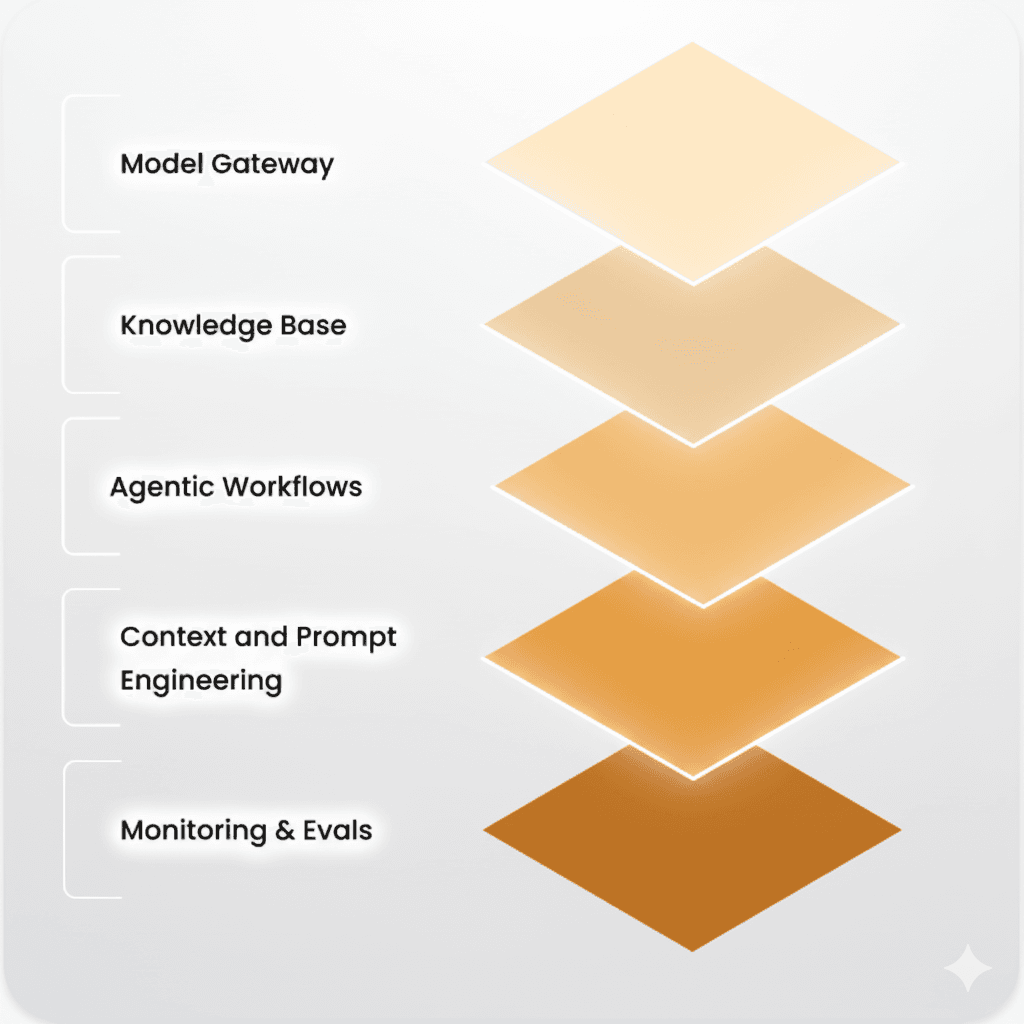
Support and consulting services availability becomes crucial during implementation and scaling phases. Organizations benefit from providers who offer strategic guidance alongside technical support, helping navigate both technical and business challenges.
Pricing models should align with usage patterns and growth projections. Total cost of ownership includes not just licensing fees, but also implementation, training, and ongoing maintenance costs. Transparent pricing structures help organizations plan budgets and measure ROI accurately.
Vendor reputation and case study analysis provide insights into real-world performance and customer satisfaction. Organizations should seek providers with proven track records in their specific industry and use case scenarios.
Vertical AI platforms offer industry-specific optimization with pre-trained models designed for particular sectors. They include built-in compliance features for sector regulations and integrate domain expertise directly into workflows, making them more effective for specialized business needs.
Implementation timelines vary based on project complexity and organizational readiness. Simple use cases can deploy within 4-8 weeks, while comprehensive solutions may require 3-6 months. AI studio platforms significantly accelerate this process by providing pre-built components and frameworks.
AI studio platforms reduce development time by 60-80% compared to custom development. They lower technical barriers, enabling business teams to participate in AI development. Cost efficiency improves through shared infrastructure and pre-built components, while access to latest innovations ensures solutions remain current.
Modern AI studio platforms provide comprehensive API connectivity and data integration capabilities. They support legacy system compatibility through standard protocols and offer migration strategies that minimize disruption. Security protocols ensure data governance requirements are met throughout integration.
Healthcare, financial services, manufacturing, and retail show the highest ROI from vertical AI implementations. These sectors have well-defined processes, regulatory requirements, and data structures that benefit from specialized AI approaches. Success stories demonstrate 30-50% efficiency improvements and significant competitive advantages.
Vertical AI studios represent the evolution of enterprise AI from experimental technology to practical business tool. They enable organizations to harness AI's transformative potential while maintaining the control, security, and cost-effectiveness that enterprise leaders demand. By focusing on industry-specific needs and providing comprehensive development environments, these platforms accelerate the journey from AI vision to business value. Organizations ready to embrace this approach will find themselves well-positioned to lead in an increasingly AI-driven marketplace.


Copyright © 2025 dotkonnekt Pte Ltd. All rights reserved.