AI Merchandising: Transforming Retail Strategy Today
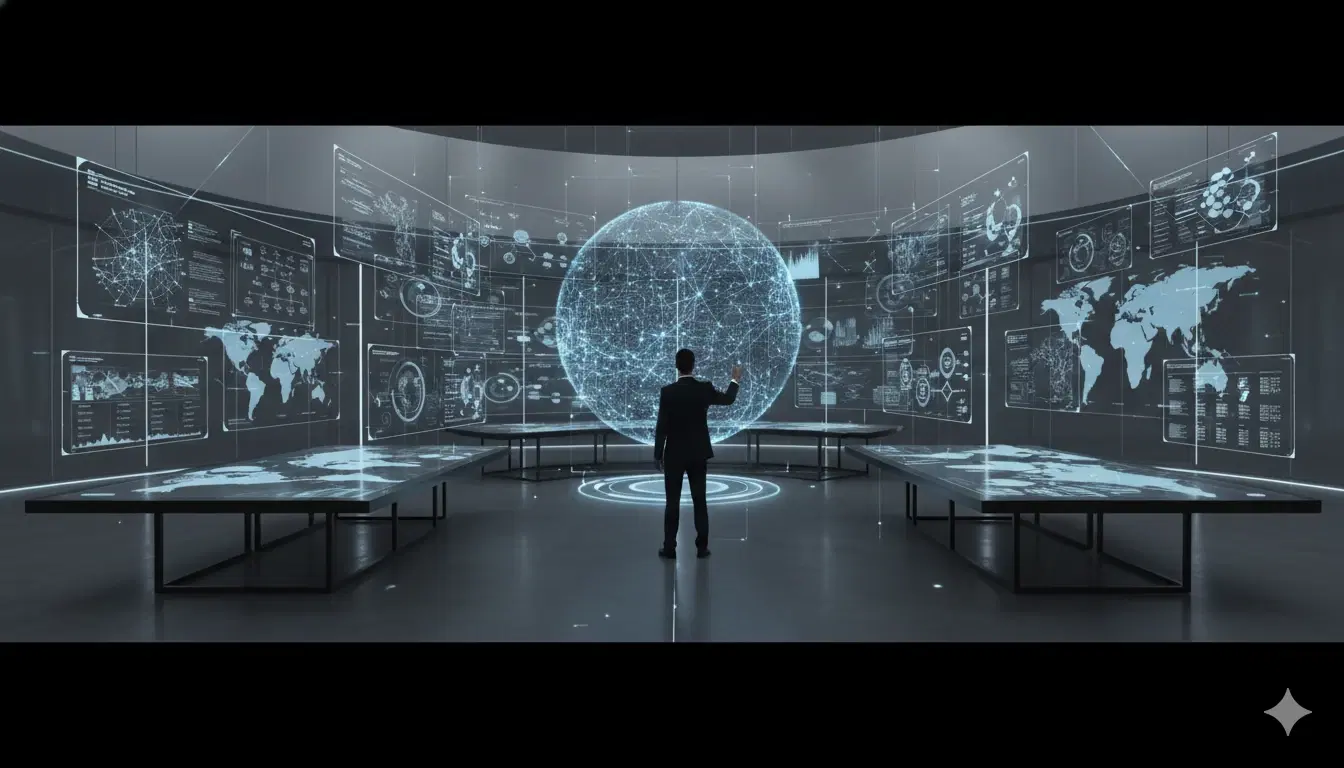

Retail has entered a new era where artificial intelligence transforms how businesses connect products with customers. Modern retailers face mounting pressure to deliver personalized experiences while managing complex inventory challenges and evolving consumer expectations. AI for merchandising emerges as the solution that bridges this gap, enabling retailers to make data-driven decisions that boost sales and enhance customer satisfaction.
This comprehensive guide explores how artificial intelligence revolutionizes retail strategy, from automated product placement to predictive inventory management. You'll discover practical applications, implementation strategies, and measurable benefits that position your business for sustained growth in today's competitive marketplace.
AI for merchandising represents a fundamental shift from intuition-based retail decisions to data-driven strategies. This technology combines machine learning algorithms, computer vision, and predictive analytics to optimize every aspect of product presentation and inventory management.
Traditional merchandising relies heavily on manual processes and historical patterns. Merchandising automation transforms this approach by analyzing real-time data streams including customer behavior, sales patterns, and market trends. The system continuously learns and adapts, making thousands of micro-adjustments that human teams cannot match in speed or accuracy.
Machine learning algorithms process vast datasets to identify patterns invisible to human analysis. Computer vision technology monitors shelf compliance and customer interactions. Predictive analytics forecast demand fluctuations with remarkable precision. These technologies work together to create a comprehensive retail AI ecosystem that responds instantly to changing conditions.
Modern retail environments demand split-second responses to customer needs and market changes. AI systems process information continuously, adjusting pricing, product placement, and promotional strategies without human intervention. This capability ensures optimal performance during peak shopping periods and adapts quickly to unexpected demand shifts.
Artificial intelligence transforms retail operations through multiple interconnected applications that work together to maximize revenue and customer satisfaction.
AI product placement uses heat mapping technology and customer behavior analysis to determine optimal product positioning. The system tracks eye movement patterns, dwell times, and purchase correlations to identify high-conversion locations. This data-driven approach increases product visibility and drives impulse purchases through strategic placement decisions.
Personalized merchandising creates unique shopping experiences for individual customers. AI analyzes purchase history, browsing patterns, and demographic data to curate product recommendations and customize store layouts. This approach significantly improves conversion rates by presenting relevant products at the right moment in the customer journey.
.jpg&w=3840&q=75)
AI systems monitor competitor pricing, inventory levels, and demand patterns to adjust prices in real-time. This capability maximizes profit margins while maintaining competitive positioning. Automated promotion strategies target specific customer segments with personalized offers that drive immediate action.
Expert Insight
Retailers implementing AI driven merchandising report average revenue increases of 15-25% within the first year, with inventory turnover improvements of up to 30%. The key lies in starting with high-impact areas like product placement and gradually expanding to comprehensive automation.
Visual presentation plays a crucial role in customer engagement and purchase decisions. AI technology revolutionizes how retailers design and optimize both physical and digital displays.
Visual merchandising AI uses computer vision to monitor planogram compliance and shelf conditions. Cameras and sensors detect misplaced products, empty shelves, and display inconsistencies. This technology ensures brand standards while reducing manual monitoring costs.
E-commerce AI optimizes product image placement, gallery sequences, and visual hierarchy to maximize engagement. The system tests different layouts automatically, measuring click-through rates and conversion performance to identify winning combinations. This approach eliminates guesswork from online merchandising decisions.
Virtual try-on capabilities and augmented reality features enhance customer confidence in purchase decisions. AI powers these experiences by analyzing product characteristics and customer preferences to provide realistic visualizations that reduce return rates and increase satisfaction.
Effective inventory management balances customer demand with operational efficiency. Inventory optimization AI transforms this complex challenge into an automated process that reduces waste while ensuring product availability.
AI systems analyze historical sales data, seasonal patterns, weather forecasts, and economic indicators to predict future demand with exceptional accuracy. This capability enables proactive inventory planning that prevents stockouts and reduces excess inventory costs.

Intelligent reordering systems monitor inventory levels and automatically generate purchase orders based on predicted demand and supplier lead times. This automation reduces manual workload while ensuring optimal stock levels across all locations.
For retailers with multiple locations, AI optimizes inventory distribution to match local demand patterns. The system identifies opportunities to transfer products between locations, maximizing sales potential while minimizing transportation costs.
AI merchandising solutions vary in complexity and capability, requiring careful evaluation to match business needs and technical requirements.
Enterprise-level platforms offer comprehensive functionality but require significant investment and technical expertise. Small business solutions provide essential features with simplified implementation processes. The key lies in selecting platforms that align with current needs while supporting future growth.
Successful implementation requires seamless integration with existing point-of-sale systems, enterprise resource planning software, and customer relationship management platforms. This connectivity ensures data consistency and enables comprehensive analytics across all business functions.
Team training and change management play crucial roles in successful AI adoption. Retailers must prepare staff for new workflows while maintaining operational continuity during the transition period. Clear communication about benefits and expectations facilitates smooth implementation.
Effective measurement systems track the impact of AI merchandising initiatives across multiple business dimensions.

Revenue per square foot improvements demonstrate the effectiveness of AI-optimized product placement and store layouts. Gross margin enhancements reflect better pricing strategies and inventory management. These metrics provide clear evidence of AI's financial impact.
Inventory turnover acceleration shows improved demand forecasting and stock management. Labor cost reductions through automation free resources for higher-value activities. These operational improvements contribute directly to bottom-line results.
Conversion rate optimization and customer satisfaction scores indicate the effectiveness of personalization efforts. Customer lifetime value enhancement demonstrates long-term relationship building through improved experiences.
Implementation costs vary significantly based on business size and complexity. Small retailers can start with basic solutions for $100-500 monthly, while enterprise implementations may require $10,000-50,000 initial investment plus ongoing subscription fees.
Most retailers observe initial improvements within 30-45 days of implementation. Significant ROI typically becomes evident within 3-6 months as the system learns customer patterns and optimizes performance.
Minimum data requirements include 6-12 months of sales history, product catalogs, and customer transaction records. Enhanced functionality requires additional data such as foot traffic patterns, customer demographics, and competitive pricing information.
AI excels at managing seasonal variations by analyzing historical patterns and external factors that influence demand. The technology adapts quickly to seasonal changes and helps optimize inventory for peak and off-peak periods.
Modern AI platforms offer APIs and integration tools that connect with most retail technology systems. Implementation teams work with existing IT infrastructure to ensure seamless data flow and operational continuity.
AI for merchandising represents more than technological advancement—it embodies a strategic transformation that positions retailers for sustained success in an increasingly competitive marketplace. The technology delivers measurable improvements in revenue, operational efficiency, and customer satisfaction while providing the flexibility to adapt to changing market conditions. Retailers who embrace these capabilities today gain significant advantages over competitors still relying on traditional merchandising approaches. The question is not whether to adopt AI merchandising, but how quickly you can implement these powerful tools to transform your retail strategy and drive exceptional business results.


Copyright © 2025 dotkonnekt Pte Ltd. All rights reserved.