AI Integration Solutions: Expert Insights Unveiled

.jpg&w=3840&q=75)
Enterprise leaders face a critical challenge in today's AI-driven landscape: selecting the right AI integration solutions from an overwhelming array of options. With 73% of organizations actively implementing AI initiatives, the pressure to make informed decisions about AI platforms and tools has never been greater. The stakes are high—choosing the wrong solution can lead to costly delays, security vulnerabilities, and missed competitive opportunities.
This comprehensive guide provides senior executives with expert insights to navigate the complex world of AI integration solutions comparison. You'll discover proven frameworks for evaluating platforms, understand key implementation considerations, and learn how to future-proof your AI strategy for sustained success.
AI integration solutions serve as the bridge between artificial intelligence capabilities and existing enterprise systems. These platforms enable organizations to seamlessly incorporate AI tools and machine learning models into their operational workflows without disrupting established processes.
The distinction between AI tools, platforms, and integration solutions is crucial for decision-makers. AI tools typically address specific tasks, while AI platforms provide broader development environments. Integration solutions focus on connecting these capabilities with existing infrastructure through APIs, middleware, and specialized data connectors.
Organizations can choose from several AI integration methodologies, each with distinct advantages:
Custom AI Solutions Development offers maximum control and tailored functionality but requires significant technical expertise and investment. No-code/low-code AI platforms democratize AI implementation by enabling business users to create solutions without extensive programming knowledge.
Enterprise AI integration platforms provide comprehensive iPaaS capabilities, while AI-enhanced ETL tools focus on intelligent data processing. API-first AI solutions emphasize seamless connectivity, and hybrid cloud AI integration balances flexibility with security requirements.
AI agent integration frameworks represent the newest approach, enabling autonomous AI systems to work collaboratively within enterprise environments.
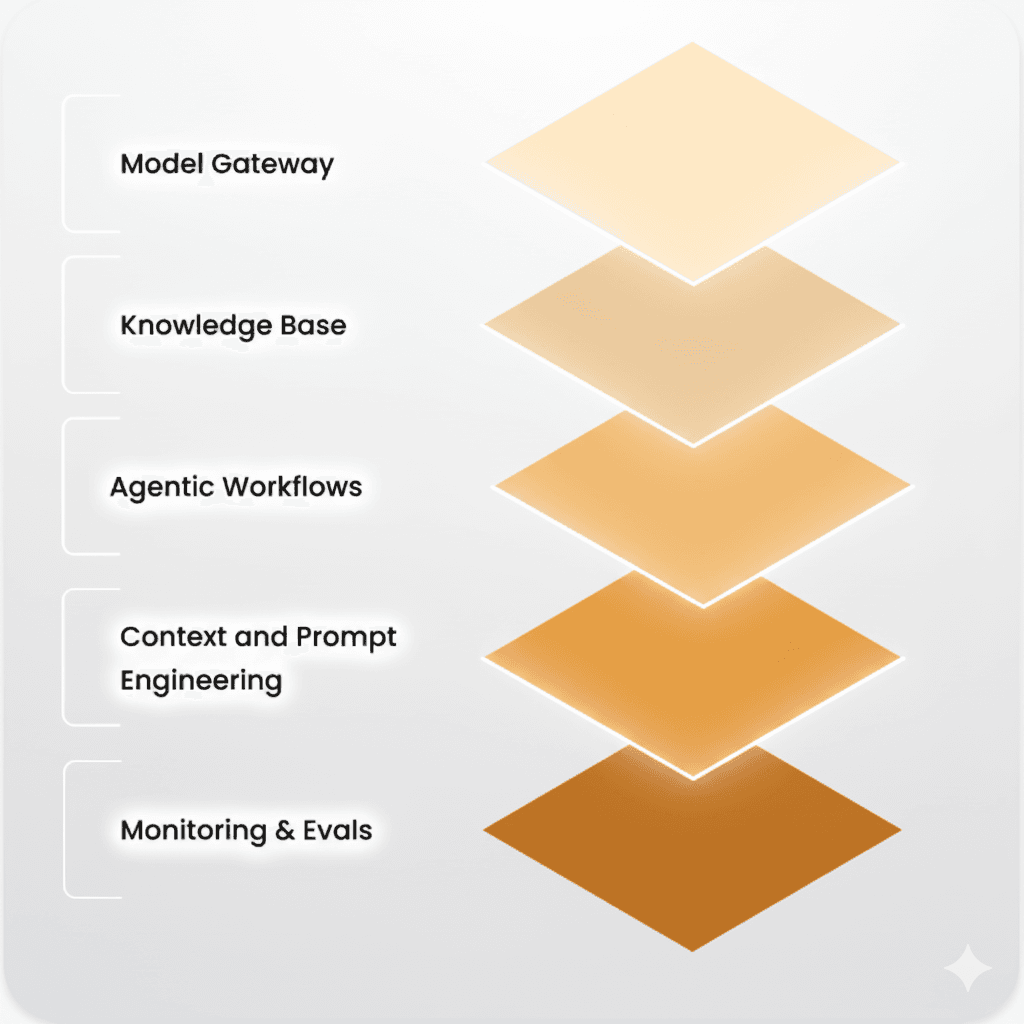
Leading enterprise AI platforms each offer unique strengths for different organizational needs. Microsoft's ecosystem excels in productivity integration, while AWS provides extensive machine learning services with robust scalability. Google Cloud emphasizes advanced AI research capabilities, and IBM Watson focuses on industry-specific solutions.
When comparing AI solutions, consider factors like deployment flexibility, security controls, and integration complexity. The best AI solutions for your organization depend on existing infrastructure, technical capabilities, and strategic objectives.
No-code platforms have transformed AI implementation accessibility. These solutions enable rapid prototyping and deployment while maintaining enterprise-grade security and compliance standards. However, organizations must balance ease of use against functional limitations and long-term scalability requirements.
Expert Insight
"The most successful AI implementations combine the accessibility of no-code platforms with the flexibility of custom development. Organizations that adopt a hybrid approach—using no-code for rapid prototyping and custom solutions for production-critical applications—achieve 40% faster time-to-value while maintaining operational control."
Successful AI integration begins with thorough assessment. Organizations must evaluate business requirements, technical infrastructure readiness, and data quality standards. This foundation determines which AI tools and platforms will deliver optimal results.
Security and compliance considerations are paramount, especially for regulated industries. The chosen solution must align with existing governance frameworks while enabling innovation and growth.
Phased rollout strategies minimize risk while maximizing learning opportunities. Starting with pilot programs allows organizations to validate approaches before full-scale deployment. This methodology enables teams to refine processes, address challenges, and build confidence across stakeholder groups.
Change management becomes critical during AI adoption. Successful implementations include comprehensive training programs, clear communication strategies, and ongoing support structures to ensure user adoption and maximize return on investment.

AI integration solutions employ various pricing structures, from subscription-based models to usage-based fees. Enterprise licensing often provides better value for large-scale deployments, while pay-per-use models suit organizations with variable workloads.
Hidden costs frequently impact total ownership expenses. These include integration complexity, ongoing maintenance, training requirements, and potential vendor lock-in scenarios. Thorough cost analysis should encompass the complete solution lifecycle.
Quantifying AI integration value requires comprehensive metrics beyond initial cost savings. Organizations should measure productivity gains, process improvements, and strategic advantages gained through enhanced decision-making capabilities.
Implementation timelines directly impact ROI calculations. Solutions that enable faster deployment and quicker value realization often justify higher initial investments through accelerated benefits.
Manufacturing organizations leverage AI integration for predictive maintenance, quality control automation, and inventory optimization. These applications typically deliver measurable ROI through reduced downtime, improved product quality, and optimized resource allocation.
Healthcare organizations focus on patient data integration and diagnostic AI implementation, while financial services prioritize fraud detection and risk assessment automation. Both industries require solutions that maintain strict compliance standards while enabling innovation.

Generative AI integration represents the next frontier for enterprise applications. Organizations must evaluate how current solutions will adapt to emerging capabilities while maintaining existing investments and operational stability.
Edge computing and distributed AI processing will reshape integration requirements. Forward-thinking organizations are selecting platforms that support these evolving architectures without requiring complete system overhauls.
Successful AI strategies anticipate growth and change. The best platforms provide clear migration paths, avoid vendor lock-in scenarios, and support continuous learning and adaptation as organizational needs evolve.
Focus on security capabilities, integration complexity, scalability potential, and total cost of ownership. Evaluate how well each solution aligns with your existing infrastructure and strategic objectives.
Implementation timelines vary from 3-6 months for simple integrations to 12-18 months for complex enterprise deployments. Phased approaches often deliver value within 60-90 days while building toward comprehensive solutions.
Common risks include data security vulnerabilities, vendor lock-in scenarios, inadequate change management, and underestimating integration complexity. Thorough planning and pilot programs help mitigate these challenges.
Select solutions that deploy within your secure environment, maintain data governance controls, and provide comprehensive audit capabilities. Avoid platforms that require data to leave your controlled infrastructure.
Consider platforms that combine ease of use with expert support services. Solutions that provide both self-service capabilities and professional services enable organizations to start quickly while building internal capabilities over time.
Selecting the right AI integration solution requires balancing multiple factors including technical capabilities, security requirements, cost considerations, and strategic alignment. The most successful organizations adopt a systematic evaluation approach that considers both immediate needs and long-term objectives. By focusing on solutions that provide flexibility, security, and scalability, enterprises can build AI capabilities that drive sustained competitive advantage while maintaining operational control and cost-effectiveness.


Copyright © 2025 dotkonnekt Pte Ltd. All rights reserved.